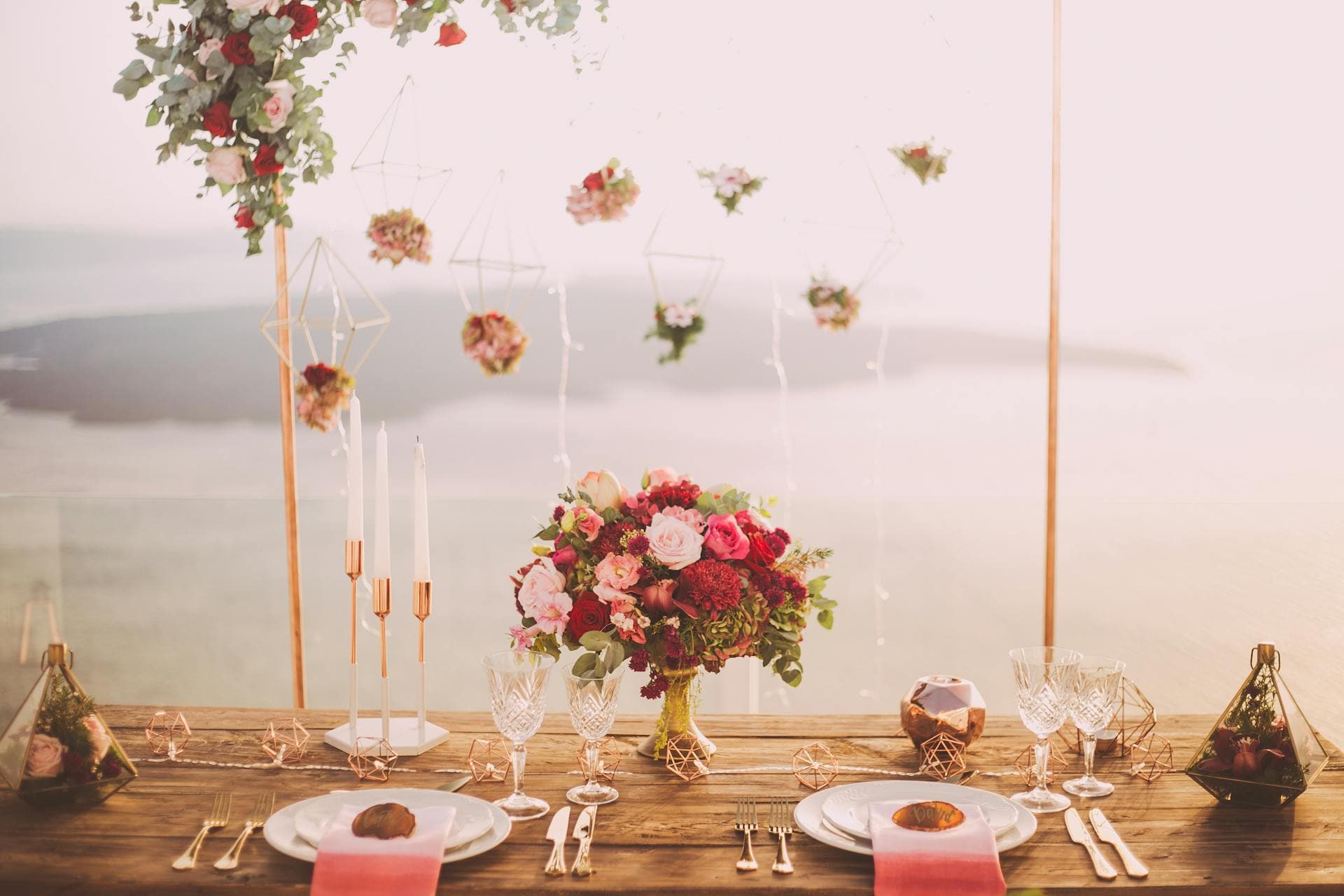
Complimentary Resource Guide
Event Design Inspiration & Expert Tips
Professional design principles to help you create an unforgettable atmosphere — from color theory to spatial layout.
From Your Creative Team
Design With Intention
Great event design goes beyond decoration. It's about creating an intentional atmosphere that reflects your vision, engages your guests, and tells a story through every detail. These principles guide our approach to every event we design.
01
Color Theory Is Strategy, Not Decoration
Don't choose colors for aesthetics alone — use color psychology intentionally. Analogous color schemes (3–5 adjacent hues on the color wheel, like blue-violet-purple) create unified, calming atmospheres. Complementary colors (opposite on the wheel) create energy and drama. Your color selection should reinforce the event's emotional intention, not just look pretty.
Expert Tip
Start with the emotion you want guests to feel, then choose colors that evoke it. Warm golds and blush tones feel romantic and intimate. Deep jewel tones feel luxurious and dramatic.
02
Lighting Is Your Most Powerful Design Element
Good lighting transforms a space more effectively than any other design element. Cool blues and greens evoke calm; warm ambers and golds create energy and intimacy. Uplighting — ground-level lights facing upward on walls and columns — is especially effective for transforming plain venues into visually stunning spaces.
Expert Tip
Never rely solely on venue lighting. Even a simple addition of uplighting in your brand or wedding colors can completely transform the atmosphere of a space.
03
Use Golden Hour as a Design Material
For outdoor events, treat natural light quality as a design element itself. Position key areas — lounge seating, dining tables, the dance floor — to leverage golden hour light. It's cost-effective, universally flattering, and creates a natural visual hierarchy that guides guest flow.
04
Spatial Layout Drives Guest Engagement
Circular layouts encourage inclusivity and conversation. Elevated stages create authority and visibility. Multi-zone configurations — lounge, dining, dance floor, photo area — support experiential storytelling. Research shows attendees are significantly more likely to remember your event when layout encourages proximity and natural movement.
Expert Tip
Create at least three distinct zones at your event. When guests move between spaces, they create new memories and conversations at each one.
05
Tents Are Design Features, Not Just Shelters
An event tent shouldn't feel like four white walls. Intentional tent design integrates your theme through fabric color, layered lighting, and spatial arrangement. Draping, festoon lights, chandeliers, and intelligent layout prevent the 'warehouse' feeling that undermines the rest of your design.
06
Bring Nature Indoors With Biophilic Design
Living walls, potted trees, floral installations, natural wood elements — biophilic design creates emotional connection and calming atmospheres. This approach works across all event types and price points, from intimate dinners to large-scale galas. Nature doesn't compete with your design — it elevates it.
Expert Tip
Even a few potted olive trees or a simple greenery installation creates warmth. You don't need a full living wall — strategic natural elements make a powerful impact.
07
Design for Dwell Time
Create intentional 'stopping points' that encourage guests to spend time in different areas: a photo backdrop with dramatic lighting, a lounge with signature cocktails, an interactive food station, a dessert display. These micro-experiences prevent the standing-and-chatting monotony and give guests memorable moments to take away.
08
Choose Trends That Serve Your Vision
Design trends exist to inspire, not to dictate. Every choice should align with your specific brand, aesthetic, and event objectives. A trend that's irrelevant to your event will feel forced and date quickly. The best events feel timeless because their design choices serve a clear, intentional vision.
Expert Tip
Before incorporating any trending element, ask: does this support the feeling we want to create? If the answer isn't an immediate yes, skip it.
09
Guest Comfort Is a Design Priority
For outdoor events, shade, airflow, water stations, and temperature management aren't afterthoughts — they're core design elements. Comfortable guests are engaged guests. Oversize umbrellas, draped fabric installations, and strategic seating placement show thoughtfulness that elevates the entire experience.
10
Test Colors Under Actual Lighting
Your chosen color palette should complement the natural or artificial lighting at different times of day. Colors shift dramatically under different light temperatures — what looks perfect in daylight may read completely different under warm evening lights. Always test your fabrics, florals, and decor under the actual conditions they'll be seen in.
Expert Tip
Visit your venue at the same time of day your event will take place. Bring fabric swatches and decor samples to see how they look under that specific light.
Let's Design Your Vision
From concept to execution, we'll bring your event aesthetic to life with expert design and meticulous attention to detail.